Gyeongbokgung Palace (경복궁) - Korea Travel Guide
Step back in time at Gyeongbokgung Palace, Seoul's grandest Joseon-era landmark, where majestic architecture and rich royal history come to life.


If there is one absolute must-visit landmark in Seoul, it is the magnificent Gyeongbokgung Palace. Serving as the primary royal palace of the Joseon dynasty, this sprawling complex is a breathtaking testament to Korea's rich architectural heritage, royal history, and resilient spirit. Walking through its grand gates feels like stepping directly into a historical Korean drama, where the bustling modern metropolis of Seoul fades away, replaced by tranquil ponds, majestic wooden halls, and stone courtyards that have stood the test of time.
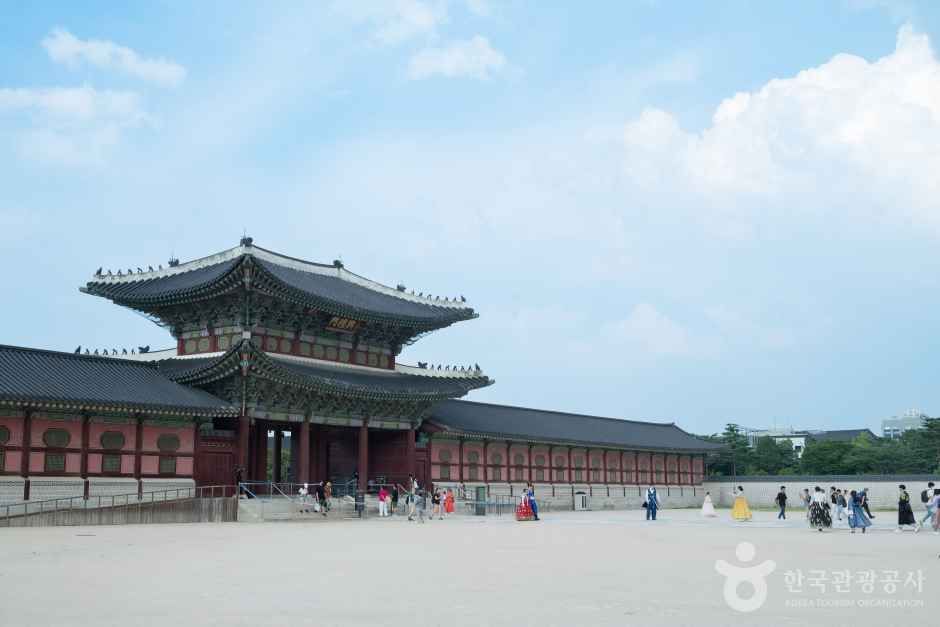
The grand architecture of Gyeongbokgung Palace standing beautifully against the mountain backdrop.
The Rich History of Gyeongbokgung Palace
Constructed in 1395 by King Taejo, the founder of the Joseon dynasty, Gyeongbokgung Palace is the largest and arguably the most beautiful of Seoul's Five Grand Palaces. Its name translates to "Palace Greatly Blessed by Heaven," a fitting title for a site that served as the heart of the kingdom for centuries. Because of its location relative to other palaces—situated north of Changdeokgung and Gyeonghuigung—it is also affectionately known as the Northern Palace.
Despite its grandeur, the palace has faced massive challenges throughout history. It was completely destroyed by fire during the Imjin War (1592–1598) and left in ruins for over 270 years. It wasn't until the reign of King Gojong, under the leadership of Heungseondaewongun, that all 7,700 rooms of the palace were painstakingly restored. However, tragedy struck again in the late 19th century with the assassination of Empress Myeongseong on the palace grounds, leading to the decline of its royal functions. Today, extensive restoration efforts continue to bring this cultural masterpiece back to its original glory.
Intricate wooden carvings and vibrant dancheong paintwork on the palace buildings.
Must-See Architectural Highlights
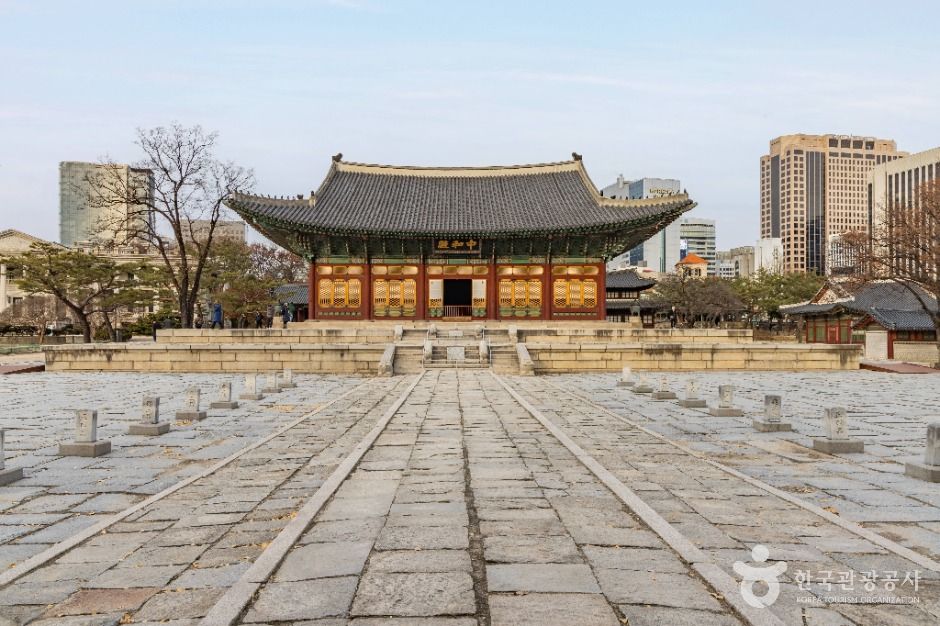
- Geunjeongjeon Hall: The throne hall where the king held official audiences, received foreign envoys, and conducted state affairs. The stone-paved courtyard and the detailed animal sculptures lining the balustrades represent the peak of Joseon-era craftsmanship.
- Gyeonghoeru Pavilion: Elevated on stone pillars over a peaceful, lotus-filled pond, this pavilion was used for state banquets and royal celebrations. It is widely considered one of the most beautiful examples of traditional Korean pavilion architecture.
- Hyangwonjeong Pavilion: Located in the northern section of the palace, this hexagonal pavilion sits on a small island in the middle of a quiet pond, connected by a wooden bridge. It offers a more intimate, serene atmosphere compared to the grand public areas.
- On-Site Museums: Enhance your visit by exploring the National Palace Museum of Korea, located to the west of Heungnyemun Gate, and the National Folk Museum of Korea, situated on the eastern side near Hyangwonjeong Pavilion. Both museums offer incredible insights into royal court life and daily historical Korean culture.

The iconic Gyeonghoeru Pavilion reflecting beautifully on the surrounding water.
Best Time to Visit
Gyeongbokgung Palace is spectacular year-round, but spring (April to May) and autumn (September to October) offer the most pleasant weather and stunning natural backdrops. In spring, cherry blossoms frame the ancient pavilions, while autumn transforms the palace grounds with brilliant golden ginkgo leaves and fiery red maples.
To avoid the largest crowds, aim to arrive right when the palace opens at 9:00 AM. This early hour also offers the best lighting for photography. For a truly immersive experience, consider renting a traditional Korean Hanbok from a nearby rental shop, such as the Lee Ri-Ja Hanbok Museum nearby. Visitors wearing Hanbok receive free admission to the palace!

Vibrant foliage framing the historical stone structures of the palace.
How to Get There
Located in the heart of Seoul, Gyeongbokgung Palace is incredibly easy to access via public transportation:
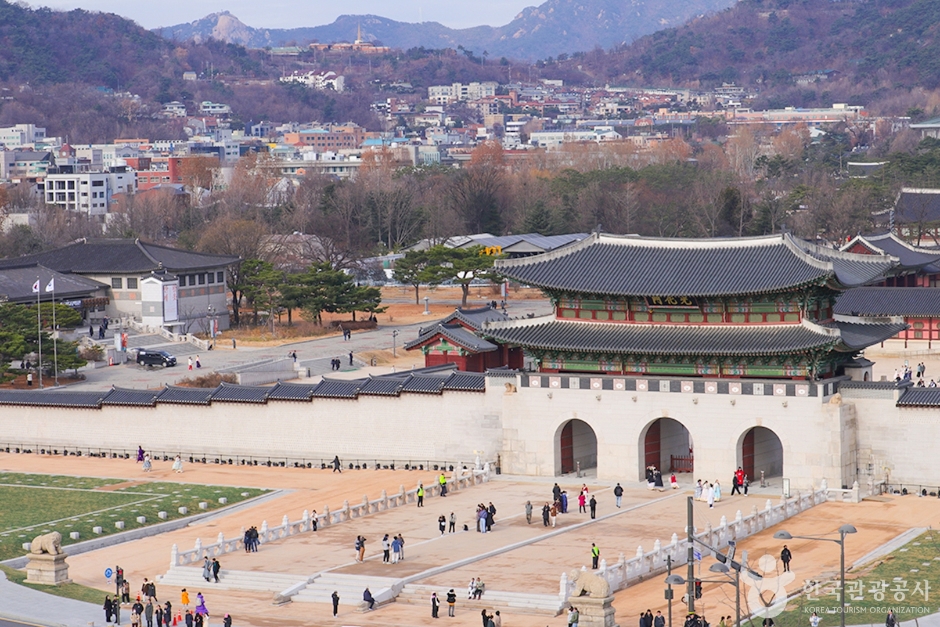
- By Subway: Take Seoul Subway Line 3 to Gyeongbokgung Station and take Exit 5. This exit leads you directly into the palace courtyard. Alternatively, you can take Line 5 to Gwanghwamun Station (Exit 2) and take a short walk past the majestic Gwanghwamun Gate.
- By Bus: Numerous city buses stop directly in front of Gyeongbokgung Palace or Gwanghwamun Square.
- By Car: Parking is available on-site, though public transport is highly recommended due to central Seoul traffic.

Spacious stone courtyards that once hosted grand royal ceremonies.
Visitor Information for Gyeongbokgung Palace
Plan your itinerary with these essential visitor details:
| Category | Details |
|---|---|
| Address | 161 Sajik-ro, Jongno-gu, Seoul |
| Opening Hours |
November–February: 09:00–17:00 (Last admission 16:00) March–May & September–October: 09:00–18:00 (Last admission 17:00) June–August: 09:00–18:30 (Last admission 17:30) |
| Closed On | Tuesdays (If Tuesday is a public holiday, it closes on the next business day) |
| Parking | Available (fees apply) |
| Inquiries | +82-2-3700-3900 |
Frequently Asked Questions
Is there an admission fee for Gyeongbokgung Palace?
Yes, there is a small admission fee for adults (typically 3,000 KRW), but children and seniors can enter for free. Furthermore, any visitor wearing a full traditional Hanbok receives completely free admission.
Are English guided tours available?
Yes, the palace offers free guided tours in English, Chinese, and Japanese at scheduled times throughout the day. You can check the exact times at the information center near the main entrance.
How much time should I spend at the palace?
To fully explore the grounds, view the main pavilions, and visit either the National Palace Museum or the National Folk Museum, you should plan to spend at least 2 to 3 hours here.
A journey through Gyeongbokgung Palace is more than just a sightseeing tour; it is an immersive walk through Korea's living history. Whether you are marveling at the reflection of Gyeonghoeru Pavilion in the water or watching the Royal Guard Changing Ceremony at the front gate, the palace promises memories that will stay with you long after you leave Seoul. Pack your camera, wear your walking shoes, and get ready to experience the timeless majesty of Korea's royal past!
Nearby Attractions
Nearby Restaurants
Nearby Cultural Spots
Nearby Shopping

Nearby Accommodation
Camping Friend — Camping & Travel in Korea
Discover campsites, local attractions, and travel guides across Korea.
Built by a campsite owner to make camping and travel easier for everyone.
![[강원특별자치도 캠핑장] 별마로빌리지캠핑장 - 자연 속에서 즐기는 완벽한 힐링 휴식](https://gocamping.or.kr/upload/camp/1327/thumb/thumb_720_1833u9D63SqnTfClEAKrR2n6.jpg)
![[강원특별자치도 캠핑장] 보보스캇 캠핑장 - 자연 속에서 즐기는 완벽한 힐링 휴식](https://gocamping.or.kr/upload/camp/1369/thumb/thumb_720_0863ZMdwcwRV5puY33Di41tY.jpg)