Deoksugung Palace (덕수궁) - Korea Travel Guide
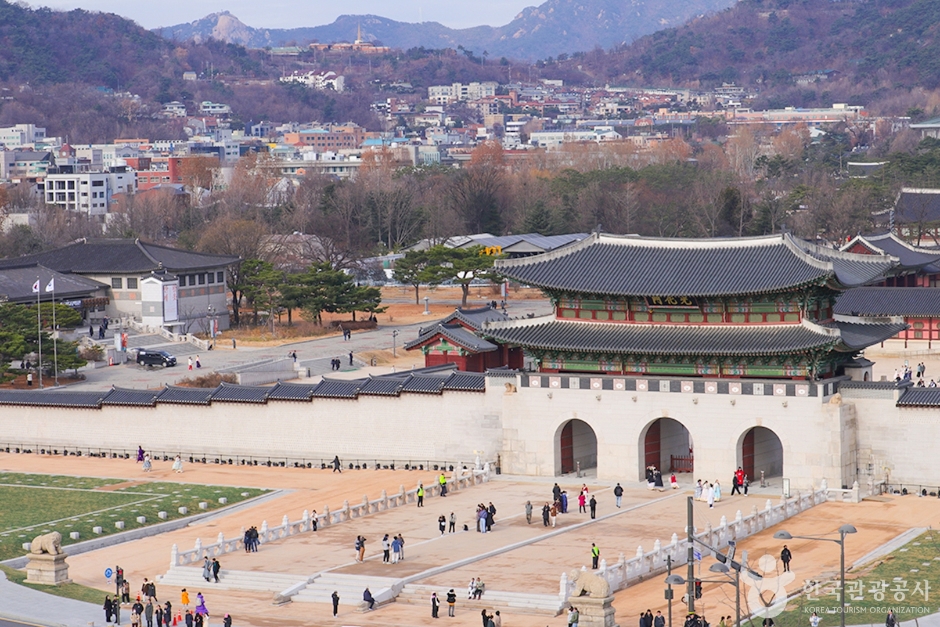
Step into Deoksugung Palace, a historic Seoul landmark where traditional Korean royal heritage meets striking modern and Western-style architecture.

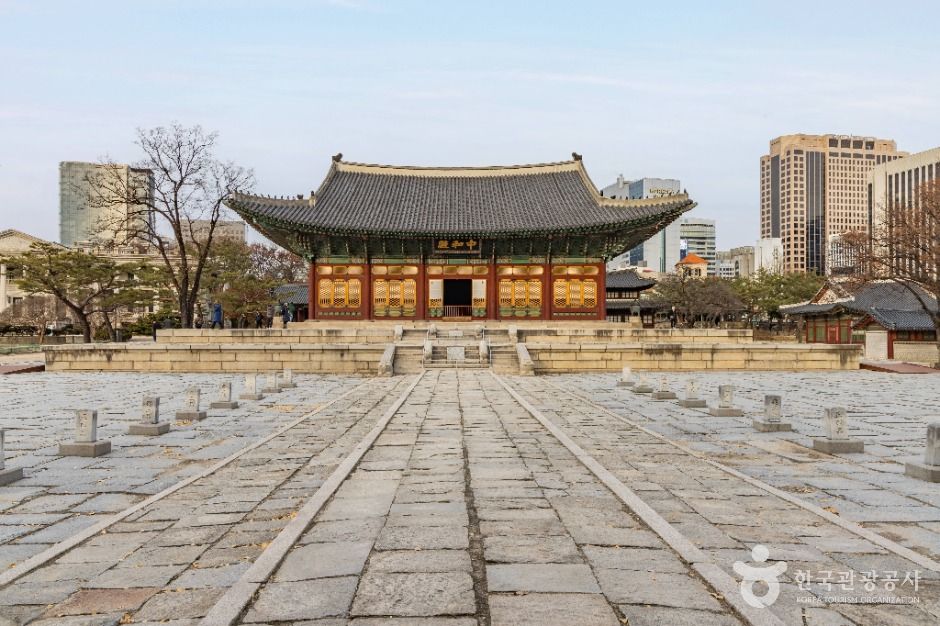
Seoul is a city where futuristic skyscrapers stand side-by-side with ancient history, and nowhere is this beautiful contrast more apparent than at Deoksugung Palace. Located in the very heart of the bustling downtown area, this historic site offers a tranquil escape into Korea's royal past. Unlike the other grand palaces of Seoul, Deoksugung Palace is uniquely famous for its harmonious blend of traditional Korean architecture and early 20th-century Western-style buildings, making it an absolute must-visit for any traveler exploring the capital.
The stunning contrast between Deoksugung Palace and the modern Seoul skyline.
The Fascinating History of Deoksugung Palace
Deoksugung Palace was not originally built to be a royal palace. It started as the private residence of Grand Prince Wolsan (1454–1488), the older brother of King Seongjong of the Joseon dynasty. However, history took a dramatic turn in 1593 during the Imjin War. With all the other major palaces burned down, King Seonjo had to use this residence as a temporary royal palace upon his return to the war-torn capital.
It officially became a proper palace when Gwanghaegun ascended the throne in 1611 and named the residence Gyeongungung Palace. For centuries, it alternated between serving as an official royal residence and a temporary retreat. It wasn't until 1907 that the palace was renamed Deoksugung Palace, which translates to the "palace of virtuous longevity," as a wish for the long life of Emperor Gojong. Though the modern grounds are just a fraction of the palace's original size, the remaining structures carry immense historical and cultural weight.

Intricately painted traditional wooden structures inside the palace grounds.
What to See Inside Deoksugung Palace
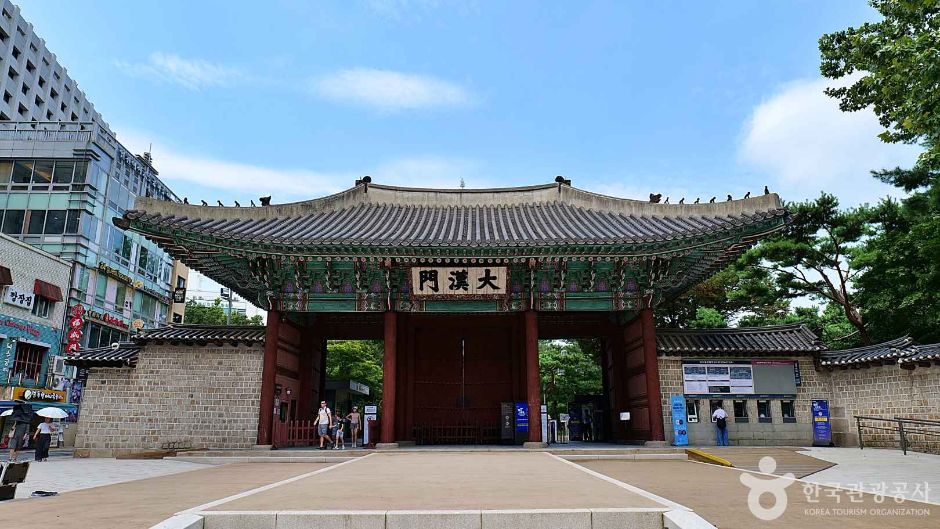
Exploring the palace grounds reveals a captivating architectural journey. As you enter through the grand Daehanmun Gate, you will find yourself walking along peaceful, tree-lined paths that make you forget you are in the middle of one of the world's busiest cities.
The defining feature of Deoksugung Palace is its Western-style architecture, which was introduced during the late Joseon dynasty and the short-lived Korean Empire. The most famous of these is Seokjojeon Hall, a magnificent Renaissance-style stone building completed in 1910. It stands in stark, beautiful contrast to the nearby traditional wooden pavilions, such as Junghanjeon Hall, the main throne hall where state affairs were once conducted.

The grand, neoclassical Seokjojeon Hall brings a European touch to the royal grounds.
Other notable Western-influenced structures include Dondeokjeon Hall, which was recently restored to its original splendor, and Jungmyeongjeon Hall, located just outside the main stone wall. These buildings served as reception halls and banquet libraries, witnessing the turbulent diplomatic history of Korea at the dawn of the 20th century.

Traditional Korean pavilion showcasing vibrant dancheong patterns.

A quiet courtyard offering a moment of peaceful contemplation.
Best Time to Visit
Deoksugung Palace is beautiful year-round, but it truly shines during two specific times:
- Autumn (October to November): The famous stone-wall walkway outside the palace (Deoksugung Doldam-gil) becomes framed by brilliant yellow ginkgo leaves and red maples, making it one of the most romantic walking paths in Seoul.
- At Night: Unlike most other palaces in Seoul that close around 17:00 or 18:00, Deoksugung remains open until 21:00. Visiting after sunset allows you to experience the palace beautifully illuminated, offering a magical, romantic atmosphere.

The magical atmosphere of Deoksugung Palace illuminated under the night sky.
How to Get There
Because Deoksugung Palace is located in central Seoul, public transit is highly recommended as parking is not available on-site.
- By Subway: Take Subway Line 1 or Line 2 to City Hall Station. Take Exit 1, 2, or 12. Daehanmun Gate (the main entrance) is located right outside Exit 2.
- By Bus: Any blue or green city bus stopping at "City Hall" or "Deoksugung" will drop you off within a short walking distance.
- Address: 99 Sejong-daero, Jung-gu, Seoul

Detailed stone carvings lining the steps of the main throne hall.
Visitor Information
Plan your trip with this quick guide to the palace's operating hours and details:
| Category | Details |
|---|---|
| General Admission Hours | 09:00 - 21:00 (Last admission at 20:00) |
| Seokjojeon Hall Exhibition | 09:30 - 17:30 (Last docent tour at 16:30) |
| Dondeokjeon Hall Exhibition | 09:00 - 17:30 (Last admission at 17:00) |
| Jungmyeongjeon Hall Exhibition | 09:30 - 17:30 (Last admission at 17:00) |
| Closed Days | Mondays (Closed the following business day if Monday is a national holiday) |
| Parking | Not available |
| Inquiries | +82-2-771-9951 |
Frequently Asked Questions
Is there an admission fee for Deoksugung Palace?
Yes, but it is extremely affordable. General admission for adults (ages 19-64) is 1,000 KRW. Admission is free for children under 18, seniors aged 65 and over, visitors wearing traditional Hanbok, and everyone on Culture Day (the last Wednesday of every month).
Can I book a guided tour of Seokjojeon Hall?
Yes, the interior of Seokjojeon Hall can only be viewed via a guided docent tour. International visitors are highly recommended to check the official website in advance to reserve an English-guided tour slot, as walk-in spaces are limited.
What is the famous stone wall road next to the palace?
It is called Deoksugung Doldam-gil (Deoksugung Stone-Wall Road). It is a beautiful pedestrian-friendly path that wraps around the palace. It is legendary for its scenic beauty, especially in the autumn, and is surrounded by cultural spots like the Seoul Museum of Art and the Jeongdong Observatory.
Whether you are a history buff, an architecture enthusiast, or simply looking for a peaceful evening stroll under the city lights, Deoksugung Palace offers an unforgettable experience. Be sure to add this unique royal sanctuary to your Seoul itinerary and experience the quiet majesty of Korea's past!
Nearby Attractions
Nearby Restaurants
Nearby Cultural Spots
Nearby Shopping
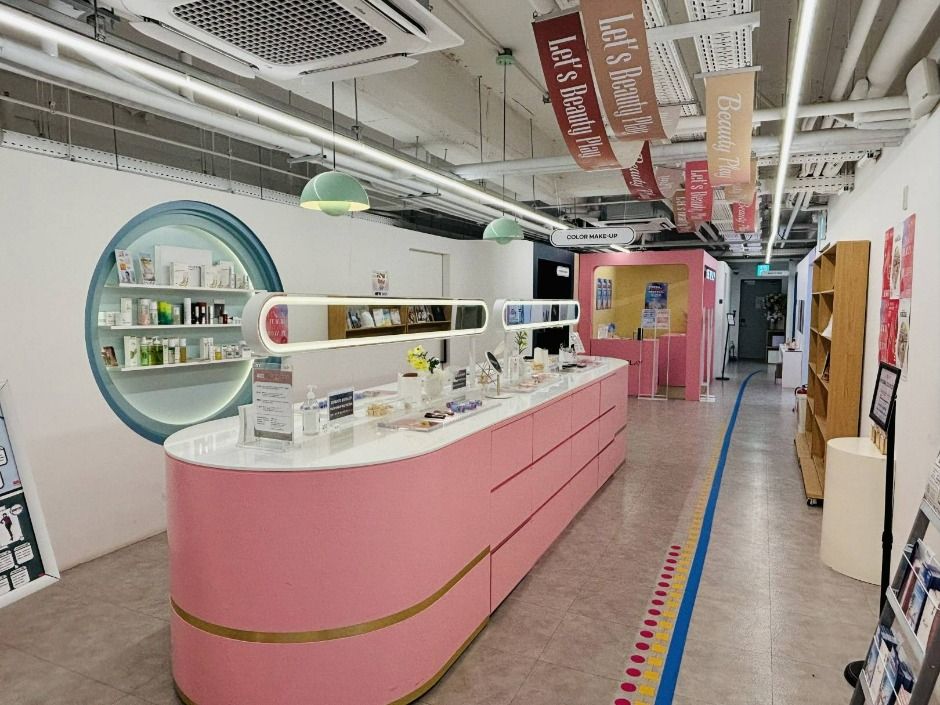
Nearby Accommodation
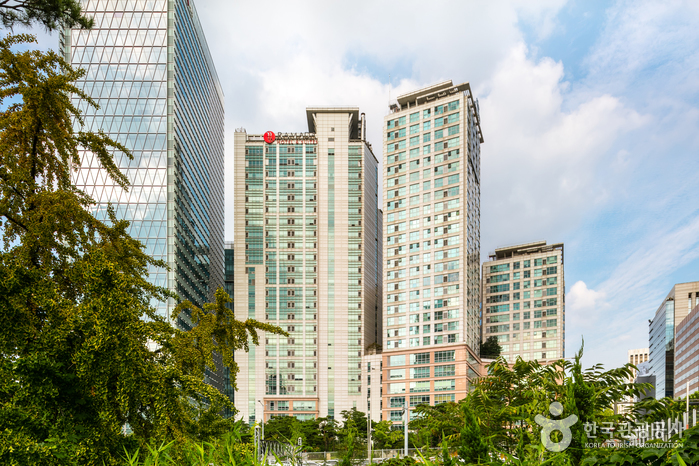
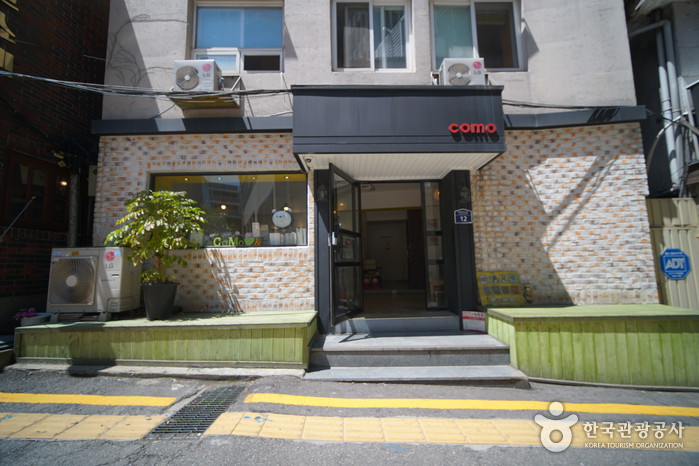
Camping Friend — Camping & Travel in Korea
Discover campsites, local attractions, and travel guides across Korea.
Built by a campsite owner to make camping and travel easier for everyone.
![[강원특별자치도 캠핑장] 별마로빌리지캠핑장 - 자연 속에서 즐기는 완벽한 힐링 휴식](https://gocamping.or.kr/upload/camp/1327/thumb/thumb_720_1833u9D63SqnTfClEAKrR2n6.jpg)

![[강원특별자치도 캠핑장] 보보스캇 캠핑장 - 자연 속에서 즐기는 완벽한 힐링 휴식](https://gocamping.or.kr/upload/camp/1369/thumb/thumb_720_0863ZMdwcwRV5puY33Di41tY.jpg)