Pungnap-dong Earthen Fortification (서울 풍납동 토성) - Korea Travel Guide
Walk along the ancient Baekje earthen walls of Pungnap-dong Earthen Fortification and experience a unique piece of Seoul's grand ancient history.

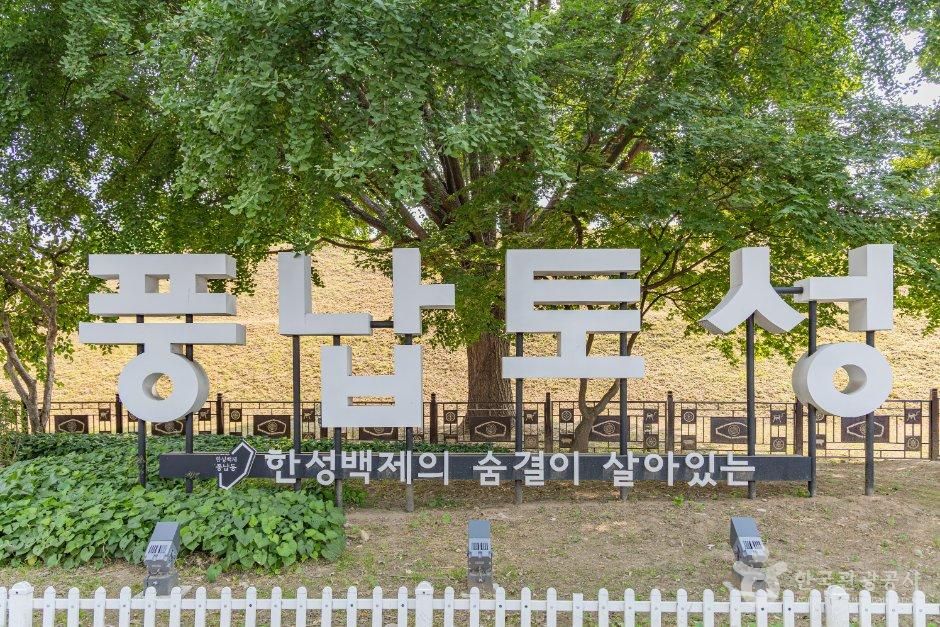
Nestled quietly in the vibrant urban landscape of eastern Seoul, the Pungnap-dong Earthen Fortification (서울 풍납동 토성) is a fascinating gateway into Korea's ancient past. Built during the early Hanseong period of the Baekje Kingdom (18 BCE – 660 CE), this massive earthwork fortification once stood as the protective heart of a thriving royal capital along the Hangang River. Today, it serves as both an extraordinary archaeological treasure and a tranquil green park where visitors can escape the city's hustle and bustle while stepping back nearly two millennia in time.
The impressive grassy slopes of the Pungnap-dong Earthen Fortification in Seoul.
The Epic History of Pungnap-dong Earthen Fortification
Originally spanning an estimated circumference of 3.7 kilometers, the fortification was one of the largest flatland earthen structures of its era—surpassing even Goguryeo's Gungnaeseong Fortress and Silla's Wolseong Fortress in sheer scale. Although the western section facing the Hangang River was lost to erosion over time, approximately 2.7 kilometers of the wall remain intact today.
The site's grand history was dramatically brought to light in 1925, when a catastrophic flood washed away layers of soil to reveal high-status artifacts such as ancient bronze cauldrons and ornamental belt buckles. Recognizing its immense historical value, the Korean government designated it as National Historic Site No. 11 in 1963. Extensive excavations since 2000 have unveiled ancient Baekje roads, large pit dwellings, tiled roof structures, temple foundations, and ritual relics, firmly establishing this area as the likely site of Wiryeseong, the initial capital of Baekje.
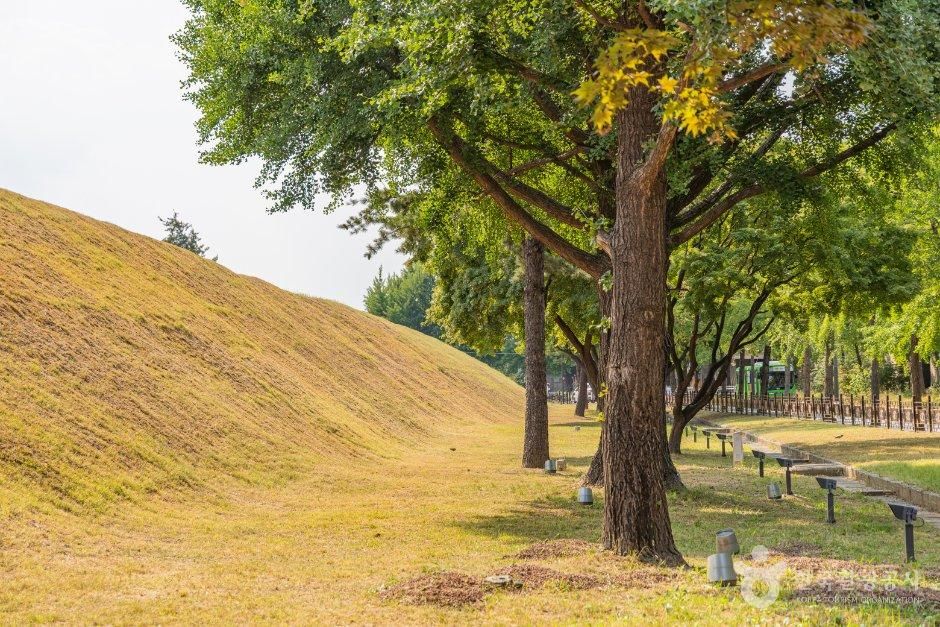
Well-preserved earthen ramparts showcasing ancient Baekje architectural engineering.
Exploring Pungnap-dong Earthen Fortification Today
Today, the site is systematically preserved across six dedicated zones. Rather than feeling like a sterile museum, the fortification forms a seamless part of the local Songpa-gu neighborhood. Smooth walking paths wind along the top and base of the earthen walls, offering a serene environment for morning strolls, afternoon picnics, or evening walks under gentle park lighting.
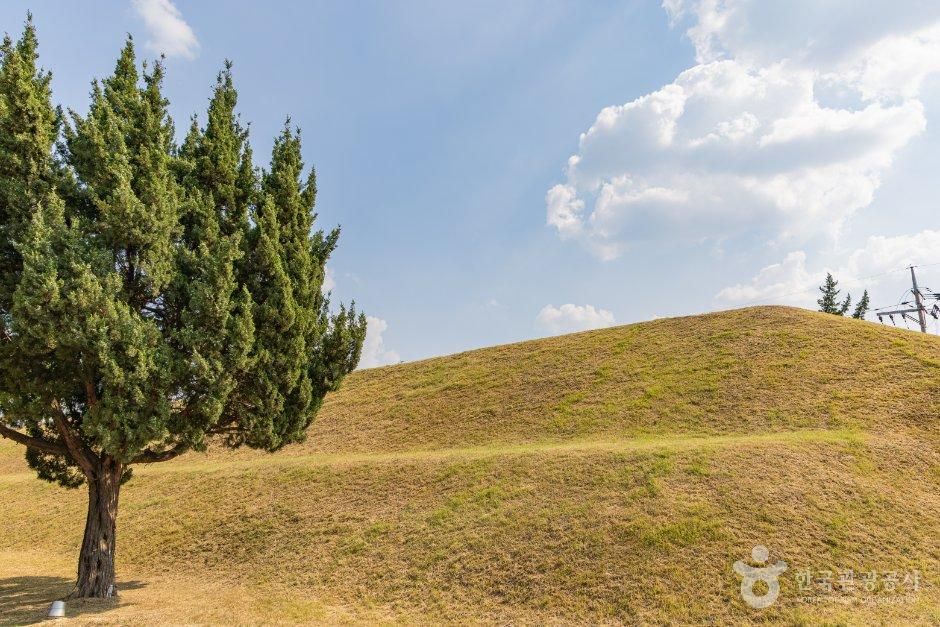
A tranquil walking trail extending alongside the historic Baekje earthen wall.
Information plaques placed along the walking trails explain the construction techniques used by ancient Baekje engineers, who layered fine clay and soil to create embankments capable of standing strong for centuries. If you enjoy combining history with outdoor leisure, you can easily pair a visit here with a stroll to nearby spots along the Hangang River, such as Gwangnaru Hangang Park, or continue your historical exploration up to the Amsa-dong Prehistoric Site.
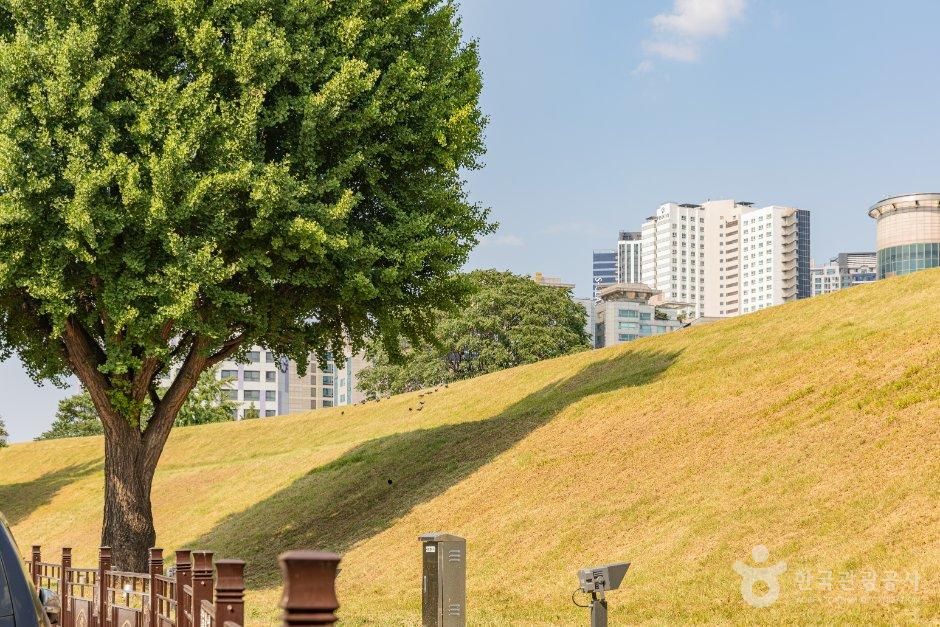
Spacious green areas offer a peaceful respite for local residents and travelers.
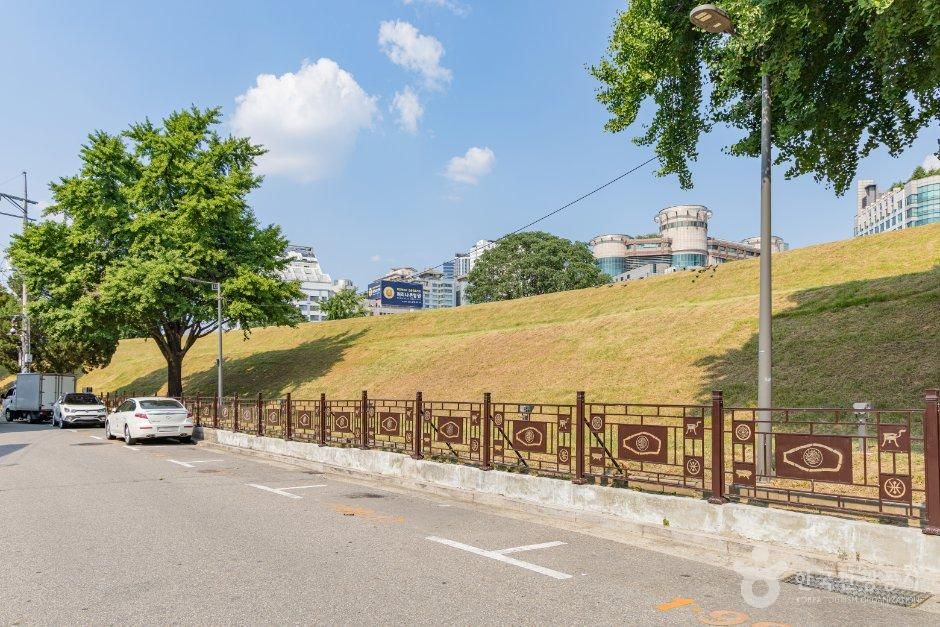
A view highlighting the harmony between ancient history and modern urban surroundings.
Visitor Information
| Item | Details |
|---|---|
| Address | 73-1 Pungnap-dong, Songpa-gu, Seoul |
| Opening Hours | Open 24 hours daily |
| Closed Days | Open all year round |
| Admission Fee | Free |
| Parking | Available nearby |
| Inquiries | +82-2-2147-2600 |
How to Get There
Reaching the fortification via public transit is straightforward and convenient from central Seoul:
- By Subway: Take Seoul Subway Line 5 or Line 8 to Cheonho Station (Exits 9 or 10). From there, it is a pleasant 5-to-10-minute walk south toward the fortification entry points. Alternatively, you can use Gangdong-gu Office Station (Line 8, Exit 4).
- By Bus: Multiple city buses stop near Pungnap-dong, including local feeder buses connecting Cheonho and Gangdong stations.
- By Car: Navigate to 73-1 Pungnap-dong, Songpa-gu. Nearby public parking facilities are accessible, though public transportation is recommended during peak weekend hours.
Best Time to Visit
The park grounds can be enjoyed year-round, but spring (April to May) and autumn (September to November) offer the most comfortable weather. Spring brings fresh greenery and blooming wild flowers along the earthworks, while autumn turns the surrounding foliage into rich golden hues. Late afternoon is an ideal time to visit, allowing you to walk the trails under soft golden sunlight and catch the sunset over the Hangang River nearby.
Frequently Asked Questions
Is there an admission fee to visit Pungnap-dong Earthen Fortification?
No, entry to the fortification grounds and walking trails is completely free and open to the public 24 hours a day.
How long does it take to walk around the fortification?
Walking along the main preserved sections takes about 45 minutes to 1.5 hours at a casual pace, depending on how many stops you make to read historical markers and photograph the landscape.
Are pets allowed on the walking trails?
Yes, pets are permitted on the outdoor trails as long as they remain on a leash and waste is cleaned up properly.
Are there guided tours available?
Songpa-gu Culture and Tourism periodically offers culture-guide programs. It is best to check the official Songpa-gu culture website or call the inquiry line in advance for updated tour schedules.
Whether you are an avid history buff eager to explore early Korean kingdom roots or simply searching for a restful green escape in eastern Seoul, the Pungnap-dong Earthen Fortification offers a unique blend of heritage and nature. Add this remarkable Baekje landmark to your Seoul itinerary for a memorable walk through history!
Nearby Attractions
Nearby Restaurants

Nearby Cultural Spots
Nearby Shopping
Nearby Accommodation
Camping Friend — Camping & Travel in Korea
Discover campsites, local attractions, and travel guides across Korea.
Built by a campsite owner to make camping and travel easier for everyone.

![[강원특별자치도 캠핑장] 영월 외룡 캠핑장 - 자연 속에서 즐기는 완벽한 힐링 휴식](https://gocamping.or.kr/upload/camp/2230/thumb/thumb_720_1654UuPsM1plOEbJkTVd7tzq.jpg)
![[경상북도 캠핑장] 우리동네 캠핑장 - 구미 김천 금오산 캠핑장](https://gocamping.or.kr/upload/camp/8031/thumb/thumb_720_4719RZU4ra64pKNQnxspH8Et.jpg)