Gyeonghuigung Palace (경희궁) (경희궁) - Seoul Travel Guide
Step into Seoul's Western Palace, a quiet Joseon-era historic site where restored halls and leafy courtyards reveal a calmer side of Korea's capital.

Local tip: Show the Korean name 경희궁 (Gyeonghuigung Palace (경희궁)) to a taxi driver, or copy it into a map app. It makes getting there much easier.
Gyeonghuigung Palace (경희궁) is one of Seoul's five grand royal palaces, tucked into the busy Saemunan-ro corridor of Jongno-gu in Seoul, Korea. It is the quietest and most overlooked of the Joseon dynasty palaces, a place where a single restored gate and throne hall sit beside a modern art museum and open lawns. If you have already seen Gyeongbokgung and Changdeokgung, this is the palace that lets you slow down and look.
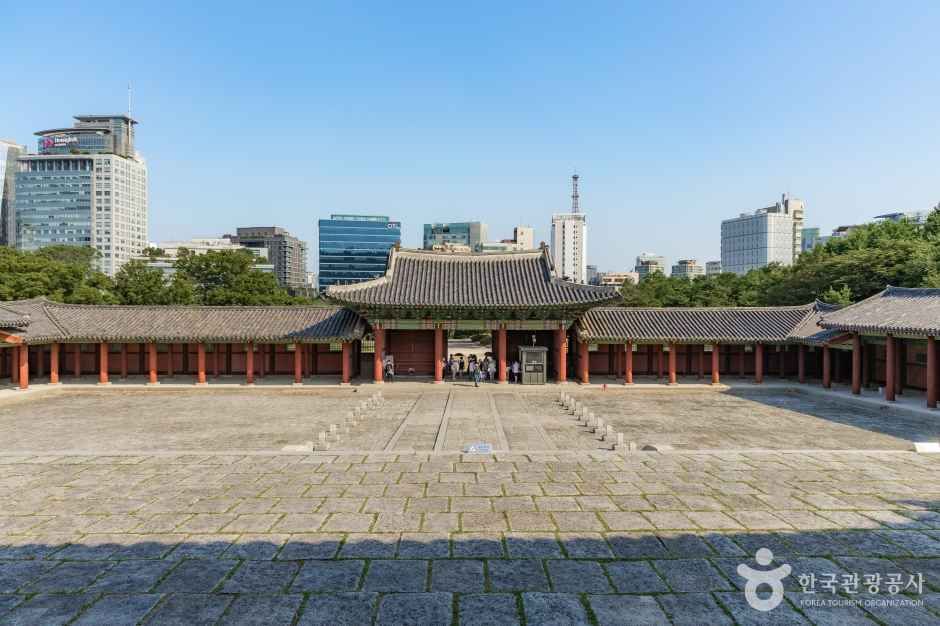
The restored gate and hall of Gyeonghuigung Palace (경희궁), framed by the modern skyline of Jongno-gu.
At a Glance
- Type of place: Royal palace of the Joseon dynasty, designated Historic Site
- Area: Saemunan-ro, Jongno-gu, central Seoul
- Suggested time: 1 to 1.5 hours for the palace grounds; 2 to 3 hours if you add the on-site art museum
- Best season: Spring and autumn for mild weather and clear light
- Opening hours: 09:00–18:00 (last entry 17:30)
- Closed: Mondays and January 1
- Parking: Available on site
Official Website Call +82-2-724-0274~6
Highlights of Gyeonghuigung Palace (경희궁)
Heunghwamun Gate, the Front Door
The main gate now standing at the entrance is a restoration, but it sets the tone for the whole visit: a wide, heavy wooden gate with a tiled roof, facing straight into a residential and office district. Originally the palace could be entered through several gates, and the gate you see today was returned to the site as part of the 1990s reconstruction. It is the natural starting point for photos, since the contrast between the old timber and the surrounding city is strongest here.
Sungjeongjeon Hall, the Main Throne Hall
Sungjeongjeon was the ceremonial heart of the palace, where the king received officials and conducted state affairs. The current hall was completed in November 1994 as part of the restoration project, and it stands on a raised stone platform in the traditional style. Compared with the crowded throne halls of the bigger palaces, you can often stand here almost alone and study the roof lines, the painted eaves, and the stone courtyard at your own pace.
Seoul Museum of Art and the Palace Lawns
Part of the old palace grounds is now occupied by the Seoul Museum of Art, which sits directly on the site and pairs surprisingly well with the historical setting. Outside, broad lawns and walking paths connect the museum, the gate, and the hall — this is where local families spread out a mat on a sunny afternoon. The Seoul Museum of History is also a short walk away, so it is easy to build a half-day route around the area's museums and the palace grounds.
Reading the Layers of History
What makes this palace unusual is how openly it shows its disruptions. The original halls were largely destroyed by fire in 1829, and the remaining buildings were removed during the Japanese occupation, when the site became a school. That school later moved south to the Gangnam area in 1987, and the land was turned into a park. Walking the grounds today, you are reading a story of loss and reconstruction rather than an untouched royal compound — and that is precisely what makes it interesting.
What Korean Visitors Say
Based on recent Korean-language visitor reviews, here is what locals highlight.
- Korean visitors often mention that this is one of the five grand palaces of the Joseon dynasty, and several note that it was built under Gwanghaegun — a piece of context that makes the modest scale easier to understand.
- Many locals recommend starting at Heunghwamun Gate, and some point out that the palace originally had several gates, which helps explain why the current entrance feels slightly disconnected from the grounds behind it.
- Families with children often pair the palace with the nearby museums, using the lawn in front of the palace as a rest stop between indoor exhibitions.
- Some visitors note that the site feels smaller and quieter than Seoul's better-known palaces, so it is best approached as a calm add-on rather than a headline attraction.
Visitor Information for Gyeonghuigung Palace (경희궁)
| Address | 45 Saemunan-ro, Jongno-gu, Seoul |
| Opening hours | 09:00–18:00 (last entry 17:30) |
| Closed | Every Monday and January 1 |
| Parking | Available |
| Admission | Not specified in the official information used for this guide — confirm on the official website before your visit |
| Inquiries | +82-2-724-0274~6 |
| Official website | heritage.go.kr |
How to Get There
The palace sits on Saemunan-ro in Jongno-gu, on the western edge of the historic center. The easiest landmark is Kangbuk Samsung Hospital, which is roughly 200 metres away — if a taxi driver knows the hospital, you are almost there. Seodaemun Station on Line 5 is the nearest subway stop, and the walk from there follows a wide, flat street.
If you are already exploring the Gwanghwamun and Jeongdong area, the palace makes a natural walking stop between sights. Parking is available on site, but the surrounding streets are busy on weekday afternoons, so public transport is usually less stressful, especially on weekends when central Seoul traffic thickens.
Best Time to Visit
Spring and autumn are the sweet spots. April and May bring mild air and fresh greenery to the lawns, while October and November offer crisp, clear skies that flatter the dark timber and tiled roofs of the restored hall. Summer is hot and humid, and the open courtyards have little shade, so plan an early morning visit if you come in July or August.
Because the palace is closed on Mondays, aim for a weekday morning if you want the quietest experience. Even on weekends, the crowds here are a fraction of what you will find at the larger palaces, and late afternoon — an hour or so before the 17:30 last entry — tends to be the calmest window.
Frequently Asked Questions
Is Gyeonghuigung Palace (경희궁) worth visiting?
Yes, especially if you have already seen Seoul's bigger palaces or want a quieter historic stop in the city center. The restored gate and throne hall are impressive, the museum on the grounds adds variety, and the site rarely feels crowded.
How long does it take to visit Gyeonghuigung Palace (경희궁)?
Most visitors need about one to one and a half hours to walk the grounds and see the gate and main hall. Add another hour or two if you plan to visit the Seoul Museum of Art on the same site.
How do I get to Gyeonghuigung Palace (경희궁)?
The address is 45 Saemunan-ro, Jongno-gu, Seoul. The nearest subway is Seodaemun Station on Line 5, and Kangbuk Samsung Hospital about 200 metres away is a useful landmark for taxis.
Is Gyeonghuigung Palace (경희궁) open on Mondays?
No. The palace is closed every Monday and on January 1. On other days it is open from 09:00 to 18:00, with last entry at 17:30.
History in Seoul does not always announce itself loudly. At Gyeonghuigung Palace (경희궁), a royal gate stands beside a city street, a throne hall faces a modern museum, and the whole story of loss and rebuilding unfolds in a single afternoon walk. Put it on your Seoul itinerary — and give yourself time to linger on the lawn.
Nearby Attractions
Nearby Restaurants

Nearby Cultural Spots
Nearby Shopping

Nearby Accommodation
More to Explore in Seoul
- Yeouido Hangang Park (여의도한강공원) (여의도한강공원) - Seoul Travel Guide
- Youth Clinic (유스의원) (여의도샛강생태공원) - Seoul Travel Guide
- Yeouido Park (여의도공원) (여의도공원 문화의마당) - Seoul Travel Guide
- Cheonggyecheon Stream (청계천) (청계천 헌책방거리) - Seoul Travel Guide
Camping Friend — Camping & Travel in Korea
Discover campsites, local attractions, and travel guides across Korea.
Built by a campsite owner to make camping and travel easier for everyone.


