Bongjeongsa Temple [UNESCO World Heritage] (봉정사 [유네스코 세계문화유산]) (개목사) - Gyeongsangbuk Travel Guide
Nestled in Cheontdeungsan Mountain, UNESCO-listed Bongjeongsa Temple houses Korea's oldest wooden structure amidst tranquil, scenic natural surroundings.

Local tip: Show the Korean name 개목사 (Bongjeongsa Temple [UNESCO World Heritage] (봉정사 [유네스코 세계문화유산])) to a taxi driver, or copy it into a map app. It makes getting there much easier.
Nestled on the serene slopes of Mount Cheondeong in Andong, Gyeongsangbuk-do, Korea, Bongjeongsa Temple [UNESCO World Heritage] (봉정사 [유네스코 세계문화유산]) stands as a monumental landmark of ancient Korean architecture and Buddhist culture. Believed to have been established in 672 by the Great Buddhist Monk Uisang or his disciple Neungin Daedeuk, this historic site is celebrated worldwide for housing Geungnakjeon Hall—South Korea's oldest surviving wooden building. Visitors to this quiet retreat can immerse themselves in centuries of preserved heritage, exquisite wooden craft traditions, and picturesque mountain trails.
A panoramic view of Bongjeongsa Temple surrounded by lush mountain scenery.
At a Glance
- Type: UNESCO World Heritage Site / Historical Buddhist Temple
- Location: Andong-si, Gyeongsangbuk-do, South Korea
- Suggested Duration: 1 to 2 hours (or half a day if including nearby mountain trails)
- Best Season: Spring for greenery and autumn for vibrant fall colors
- Operating Hours: 09:00 – 18:00 (Open year-round)
- Parking: Available on-site
Highlights of Bongjeongsa Temple [UNESCO World Heritage] (봉정사 [유네스코 세계문화유산])
Bongjeongsa Temple offers an incredible journey through Korea's architectural timeline. While many ancient records were lost during the Korean War, a historic discovery made during restoration work in 1972 revealed that Geungnakjeon Hall was repaired in 1363. This confirmed its status as the nation's oldest surviving wooden structure, rendering it a cornerstone of Korean cultural preservation.

Intricate traditional timber design inside the historic temple complex.
A Living Museum of Wooden Architecture
Architectural enthusiasts will appreciate how Bongjeongsa serves as an open-air showcase of traditional Korean timber bracketing systems across different eras. From the early column-head bracket style (Jusimpo) seen in Geungnakjeon to the multi-bracket style (Dapo) of Daeungjeon Hall, the complex provides a rare opportunity to see how Korean building techniques evolved over centuries.

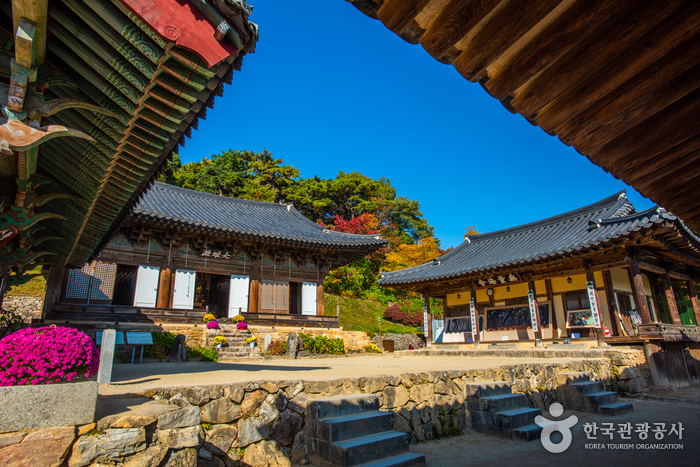
Peaceful temple courtyard framed by traditional wooden structures.
Trails to Mount Cheondeong and Neighboring Hermitages
Beyond the main temple grounds, visitors can follow forest trails up Mount Cheondeong toward satellite sites such as Gaemoksa Temple. Legend holds that Gaemoksa ("Open Eye Temple") was named after granting healing to those seeking sight. Historical figures like the late Goryeo scholar Jeong Mong-ju are also recorded to have studied in these quiet mountain retreats.

Shaded forest paths connecting the main temple area to surrounding nature trails.
What Korean Visitors Say
Based on recent Korean-language visitor reviews, here is what locals highlight:
- Architectural Masterpieces: Korean visitors frequently highlight Geungnakjeon Hall as an unmissable destination for anyone interested in Korean history, admiring its restrained, authentic medieval woodwork.
- Combined Hiking Routes: Many locals recommend combining a tour of Bongjeongsa with a walk up Mount Cheondeong or a visit to nearby Gaemoksa Temple to experience the full tranquility of the mountain landscape.
- Lush Seasonal Views: Reviewers praise the fresh mountain foliage during early summer and the peaceful atmosphere along the wooded pathways.
- Practical Tip: Some visitors note that while the main temple courtyard is easily walkable, taking the higher forest trails toward nearby hermitages involves moderate uphill walking, so wearing comfortable shoes is advised.

Exquisite ancient craftsmanship preserved in the heart of Andong.
Visitor Information
| Address | 222, Bongjeongsa-gil, Andong-si, Gyeongsangbuk-do (경상북도 안동시 서후면 개목사길 362) |
| Operating Hours | 09:00 – 18:00 |
| Closed Days | Open year-round |
| Parking Facilities | Available |
| Inquiries |
1330 Travel Hotline: +82-2-1330 (English, Korean, Japanese, Chinese) Temple Phone: +82-54-853-4181 / 054-841-6304 |
Official Website Templestay Information

Historic main hall showcasing classic Korean Buddhist temple design.
How to Get There
Bongjeongsa Temple is located in Seohoo-myeon, northwest of central Andong City.
- By Public Transport: From Andong Station or Andong Bus Terminal, take local city bus #351 directly bound for Bongjeongsa Temple. Buses drop passengers off near the entrance parking lot.
- By Taxi / Car: A taxi from central Andong or Andong Station takes approximately 20 to 30 minutes. Ample parking is available at the base of the access road leading up to the temple.
Best Time to Visit Bongjeongsa Temple [UNESCO World Heritage] (봉정사 [유네스코 세계문화유산])
While the temple grounds welcome visitors throughout the year, autumn (October to November) is widely considered the most scenic period when crisp temperatures and colorful autumn leaves frame the historic timber structures. Spring (April to May) offers pleasant hiking weather and vibrant mountain flora surrounding Mount Cheondeong.

The quiet atmosphere surrounding the main sanctuary buildings.
Frequently Asked Questions
Is Bongjeongsa Temple [UNESCO World Heritage] (봉정사 [유네스코 세계문화유산]) worth visiting?
Yes, absolutely. As a UNESCO World Heritage site home to Geungnakjeon Hall—South Korea's oldest wooden building—it offers unmatched architectural and historical value set within a tranquil forest environment.
How long does it take to visit Bongjeongsa Temple [UNESCO World Heritage] (봉정사 [유네스코 세계문화유산])?
Exploring the main temple complex takes around 1 to 2 hours. If you decide to hike up the surrounding trails of Mount Cheondeong or visit neighboring Gaemoksa Temple, set aside 2 to 3 hours.
How do I get to Bongjeongsa Temple [UNESCO World Heritage] (봉정사 [유네스코 세계문화유산])?
You can reach Andong via KTX train or express bus, then catch local city bus #351 or take a short 25-minute taxi ride directly to the temple parking entrance.
Are there parking facilities available on-site?
Yes, parking facilities are available for visitors traveling by private vehicle or rental car near the main entrance path.
Whether you are a passionate history lover seeking ancient architecture or a traveler looking for a peaceful escape in nature, a trip to Bongjeongsa Temple offers an unforgettable experience. Plan your journey to Andong today and step back in time among Korea's oldest wooden treasures!
Camping Friend — Camping & Travel in Korea
Discover campsites, local attractions, and travel guides across Korea.
Built by a campsite owner to make camping and travel easier for everyone.